« Older Entries Subscribe to Latest news

16 Apr 2013

The oldest living animal

Posted by Erlendur. No Comments

<p>I have been involved in research of the shell Arctica Islandica off the shore of North Iceland.</p>
<p>In agust 2012 I worked with Soraya Marali, from Bernd Schöne´s group from the University of Mainz in Germany collecting the shell Arctica islandica. The research team are using bivalve shells for climate reconstructions. They are interested in old live shells and shells that died during the last 1000 years. Soraya from the Univercity in Mainz told me that the ocean quahog, Arctica islandica (LINNAEUS, 1767), is an extremely long-lived bivalve species. Some specimens can get as old as 374 years (Schöne et al., 2005) or 507 years (Butler et al., 2012). The ocean quahog builds its shell by successively adding growth layers of calcium carbonate, whereby each layer represents one year of growth. The ontogenetic age of each shell can therefore be determined precisely by counting the number of growth layers. Most importantly, the shells record information about environmental factors, like seawater temperatures, during their growth, and thus, document the climate variability over several decades or even centuries. These information can be read by measuring the widths of the growth layers and by analyzing the geochemical composition of the shell. The Icelandic shells are currently under investigation. The results of this study will further improve our understanding about the mechanisms of climate change over the last millennium.</p>
<p>

</p>

<p>In Gudrun G. Thorarinsdóttir research it was found out there are 21 shell pr m2 and 2.8 kg pr m2 that means there are ower 200.000 tonn of shell Arctica islandica at shallow depth of the coast of north Iceland and Im sure we can find older shells than 507 years in this area. I have also been involved in research of fishing and behavior of the shell,how long time and how deep the shell is in the sand.  To day in Iceland there are no commercial fishing of the shell. The cod and the wolffish love the shell but they cant get it out of the sandbed and if they did they can brake the thik shell with the teeth. I dive and collect shells brake them and feed the fish when diving.</p>

I have been involved in research of the shell Arctica islandica off the shore of North Iceland.

In agust 2012 I worked with Soraya Marali, from Bernd Schöne´s group from the University of Mainz in Germany collecting the shell Arctica islandica. The research team are using bivalve shells for climate reconstructions. They are interested in old live shells and shells that died during the last 1000 years. Soraya from the Univercity in Mainz told me that the ocean quahog, Arctica islandica (LINNAEUS, 1767), is an extremely long-lived bivalve species. Some specimens can get as old as 374 years (Schöne et al., 2005) or 507 years (Butler et al., 2012). The ocean quahog builds its shell by successively adding growth layers of calcium carbonate, whereby each layer represents one year of growth. The ontogenetic age of each shell can therefore be determined precisely by counting the number of growth layers. Most importantly, the shells record information about environmental factors, like seawater temperatures, during their growth, and thus, document the climate variability over several decades or even centuries. These information can be read by measuring the widths of the growth layers and by analyzing the geochemical composition of the shell. The Icelandic shells are currently under investigation. The results of this study will further improve our understanding about the mechanisms of climate change over the last millennium.

Shells after a big storm.

Shells after a big storm.

Starfish eating Arctica Islandica

Starfish eating Arctica Islandica

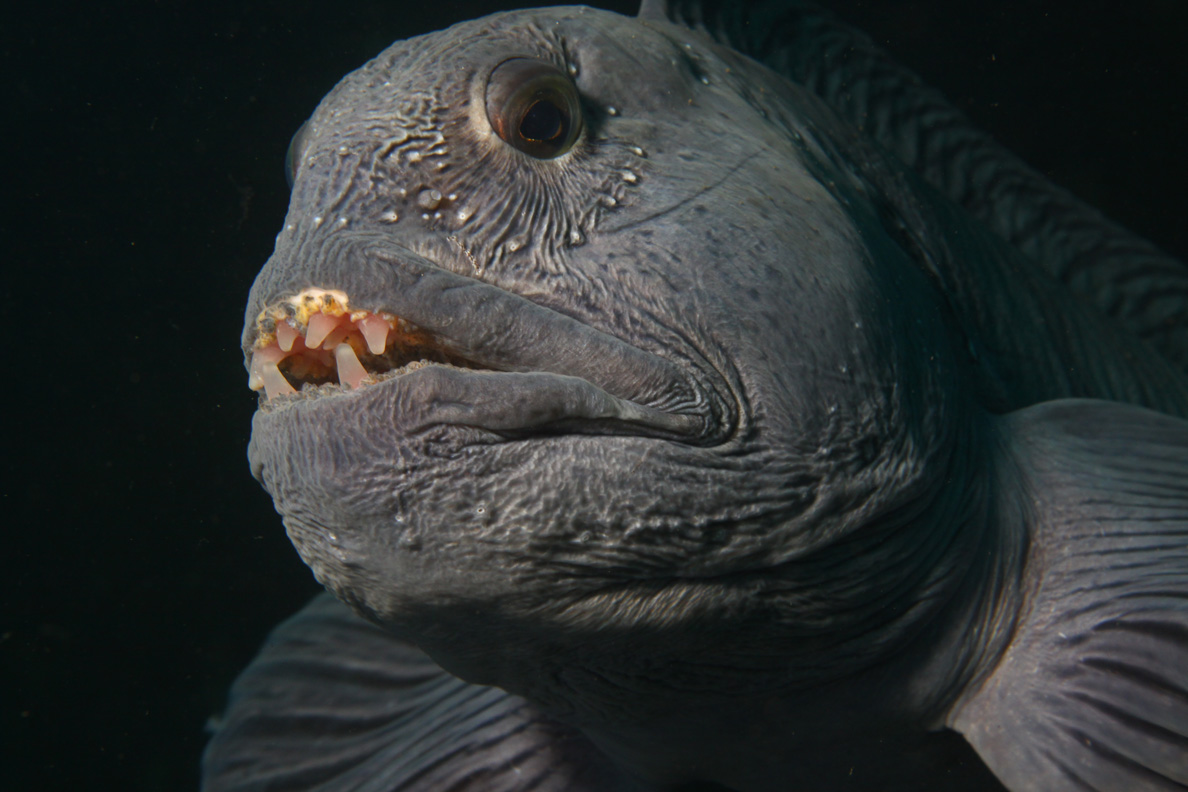
In Gudrun G. Thorarinsdóttir research it was found out there are 21 shell pr m2 and 2.8 kg pr m2 that means there are ower 200.000 tonn of shell Arctica islandica at shallow depth of the coast of north Iceland and Im sure we can find older shells than 507 years in this area. I have also been involved in research of fishing and behavior of the shell,how long time and how deep the shell is in the sand.  To day in Iceland there are no commercial fishing of the shell. The cod and the wolffish love the shell but they cant get it out of the sandbed and if they did they can brake the thik shell with the teeth. I dive and collect shells brake them and feed the fish when diving.

Cutting Arctica Islandica

Cutting Arctica Islandica

Growth Lines

Growth Lines

14 Nov 2012

Háfur – Squalus acanthias – Spur dog – Pighaj

Posted by Erlendur. No Comments

Picture taken in Eyjafjordur Iceland by Erlendur Bogason.

Picture taken in Eyjafjordur Iceland by Erlendur Bogason.

14 Nov 2012

Háfur – Squalus acanthias – Spur dog in Eyjafjordur Iceland

Posted by Erlendur. No Comments

Pitcure taken in Eyjafjordur Iceland by Erlendur Bogason

Picture taken in Eyjafjordur Iceland by Erlendur Bogason

Háfur – Squalus acanthias. Picture taken in Eyjafjordur Iceland 07.11.2012. Normal size 80-100 cm but this Squalus was ower a meter. Found from a depth of 5-200 meters.

29 Feb 2012

The Icelandic fishing company Samherji fonds research on Strytan

Posted by Erlendur. No Comments

The fishing company Samherji Ltd in Akureyri has funded a special project on studying and monitoring the Strytan hydrothermal vents ecosystem. Dr Ólafur Ragnar Grímsson, President of Iceland, is the protector of this research project. A group of scientist is now planning the research project. Most of the diving connected to this project will be done by Erlendur Bogason and his dive team where they will use both still and HD video cameras. They will also collect animals, algae and microorganism from the ecosystem for further research and identification. The project was initiated in beginning of January and the plan is to complete most of it in end of September.

Hreidar Thor Valtýrsson-University of Akureyri, Thorsteinn Már Baldvinsson-Samherji, President of Iceland Mr Ólafur Ragnar Grímsson, Kristján Vilhelmsson-Samherji, Erlendur Bogason-Strytan Dive center.

Hreidar Thor Valtýrsson-University of Akureyri, Thorsteinn Már Baldvinsson-Samherji, President of Iceland Mr Ólafur Ragnar Grímsson, Kristján Vilhelmsson-Samherji, Erlendur Bogason-Strytan Dive center.

29 Feb 2012

Strytan-The beginning of life on Earth

Posted by Erlendur. No Comments

My dive team. Saevor,Erlendur,Bob,Ingi,Anna,Eydís,Sesselja.

My dive team. Saevor,Erlendur,Bob,Ingi,Anna,Eydís,Sesselja.

The summer of 2011 National Geographic Television came to dive and film Strytan to make TV program about  the beginning of life on Earth. (See Michael Russell NASA) With National Geographic TV came Bob Ballard that is probably most famous for discovering R.M.S Titanic. My dive team assist the underwater photogrper from NGT and also took some of the underwater videos for the TV program.

7 Nov 2011

Preview from a German documentary about Crackdive in Ásbyrgi and more

Posted by Erlendur. No Comments

Preview from a German documentary about Crackdive in Ásbyrgi, Öxarfjörður and in Litla-á in northern Iceland near Husavik.

Breathtaking  scenery from underwater geothermal activity. Also showing how Iceland is splitting along the spreading center of the North-Atlantic Ridge, between the North American and Eurasian Plates.

 The German title is: “Tauchen in Nord-Island auf heissen Quellen”

18 Jun 2011

Article about Strytan in Underwaterjournal

Posted by Erlendur. No Comments

Strytan in Underwaterjournal

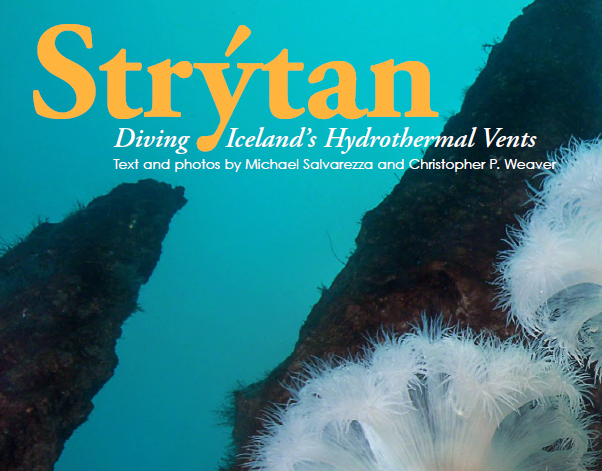
Last year the girls at www.dykkeren.com came to dive Strytan. Carole Robin wrote a article about the dive and got it published in www.underwaterjournal.com You can read about the dive and see the pictures by download underwaterjournal for free Issue 20-2011 and the article about Strytan are on pages 47-53.

2 May 2011

Giant Icelandic Halibut (100 kg)

Posted by Erlendur. No Comments

Giant Icelandic Halibut

Giant Icelandic Halibut

Every year the Halibut comes shallow to the cliffs of Iceland, looking for seabirds eggs falling off the cliffs, like this 100 kg Halibut.

10 Mar 2011

The English steam trowler ST Honorius found in Iceland

Posted by Erlendur. No Comments

0_around_edinburgh_-_granton_harbour_trawlers_daily_chronicle The old farmer Sverrir that lived at Ásmundarstöðum close to Raufarhöfn showed me were the steam trowler St Honorius sailed on a rock close to his farm and sank 19.01.1933. The bottom is coverd with kelp forest and after long dive I had not found the trawler. Then I noticed the kelp forest had different color and with closer look the darker kelp grew on the steel. In the end of the dive I found St Honorius but I still have to find the propeller, steam boiler and the rest of the trowler.

The story of the two steam trowlers Sicyion an St Honorius. Sicyion was built of steel in 1906 and was 282.5 gross tonn and around 43 meters long. Sicyion left Grimsby 03.01.1933 and was going to the fishing grounds north of Iceland. In still sea and good wether Sicyion stranded at Ásmundarstaðareyri the 15.01.1933.  All the 12 fishermen on board was rescued. At the same time St Honorius left Hull on his way to the fishing grounds north of Iceland. St Honorius was built of steel in 1929, 357 gross tonn and around 47 meters long. St Honorius stranded at Ásmundarstaðareyri in good wether and still sea 19.01.1933 only some 700 meters from Sicyion and four day after he stranded. All the 14 fishermen on board was rescued. You can still see the steam boiler from Sicyon on the coast but the farmer Sverrir told me nothing was ever seen of St Honorius after he sank. This two steam trowlers was both built at Messrs. Cook,Welton and Gammell of Beverley. Epidemic of Influenza broke out on board of Sicyion and both the crew of  Sicyion and St Honorius was in isolation in the small fram of Ásmundarstöðum for over a month. You can find wreck report for both St Honoriu and Sicyion on the internet.

4 Mar 2011

Strytan Divecenter

Posted by Erlendur. No Comments

Hjalteyri the small fishing village

 Strytan Divecenter is renting the south part of the old herring factory in  Hjalteyri that was built 1937 and at  time  was the largest herring factory in Europe. From Hjalteyri is only 10 min with boat to dive Strytan and Arnarnesstrytur. We will also teach most of our PADI courses at Hjalteyri.